Thursday, August 2, 2012

What the Hired Help Say About Ruling the Gygaxian Implied World


“Who built the seven towers of Thebes? 
The books are filled with names of kings.
Was it kings who hauled the craggy blocks of stone?
And Babylon, so many times destroyed,
Who built the city up each time? In which of Lima's houses,
That city glittering with gold, lived those who built it?
In the evening when the Chinese wall was finished
Where did the masons go?”
-Bertolt Brecht

Remember my series exploring the scattershot (yet more far more comprehensive and interesting than is normally given) domain-level play and implied world in first edition AD&D? Longtime readers may remember that I had a few more posts lined up that I never really finished off, posts that have continued to nag me despite me having them buried like the tell-tale heart deep in the drafts box. (You can read the whole series here, here, here, and here.)

Hark! Louder, louder, louder. Argh. I dissemble no more, tear up the planks and let's finish this long due series.

Let's come back around with some Talmudic readings of the section on Hirelings in the DMG (p. 28-31), a section that yields quite a bit of information on what the AD&D domain game and implied world is.

Working Stiffs and the Making of Things
The section on hirelings explicitly begins—with the first sentence—in the context of domain-play and the power arc of the AD&D character: “Most hirelings are dealt with under the section entitled EXPERT HIRELINGS - those which are typically employed at such time as the character in question has an established stronghold. Common, standard hirelings are basically the usual craftsmen or laborers taken on by lower level player characters.”

That's clear and straightforward: one entire class of hirelings revolves around life in a stronghold, the other is more the straightforward useful hacks for adventuring.

A quick look at Standard Hirelings seems to hold this view you have the porters, teamsters, and pack handlers that deal with the copious (and mightily heavy with coinage at 1/10th a pound) amounts of swag being hauled out of murderholes. You have linkboys to free up your torch arm for that Fauchard-Fork and perhaps a valet to shine your boots, high, hard. These stiffs are easy to come by (most if not all can be found in your average village) and mostly work in short stints of work paid by the day.

But now this is where things get (somewhat) interesting. This is where there are hints at a “middle game,” a sort of higher-level play where a character hasn't gone through that long, tough process of carving their hold in this post-apocalyptic AD&D world but has resources enough to start acting on a larger social scale.

Because, see, the Standard Hirelings list is not just the adventuring-specific mooks above, but includes a broader range of semi-skilled and skilled artisans. So you have carpenters, leather workers, painters (limners), and tailors too. Significantly you can hire all these hirelings at a monthly scale but this “assumes that quarters are provided for the hireling, and that these quarters contain a bed and like necessities.” It assumes further that you actually possess a base of operations.

More over it sets up a freeform way to handle production of goods:
“It is not practical to try to determine the time and expenses necessary to accomplish everything possible for the scores of standard hirelings possible to employ, so each DM will have to decide. For example, assume that a player character hires a tailor to make plain blue cloaks for all of his or her henchmen. This will take only about 1 day per garment and cost the stated amount of money plus 5 c.p. (10% of the cost of a cloak) per cloak for materials. However, if the same cloaks were to be fashioned of a material of unusual color and have some device also sewed upon them, time and materials costs would be at least double standard, and probably more.”

That first sentence strikes me as a great example of the overall design philosophy of that edition--a sweet spot for me. It acknowledges the near-infinite imaginative possibilities of each individual campaign and implies that the hireling list (and the following production rules) are just guiding models and that you can and should be specifically tailoring lists of such working folks to your own quirks. Black lotus powder distillers? Pleasure barge shipbuilders? Sure here you go, here's a detailed example/baseline for their wages and what you charge the players.

Spun a different way, this whole subsection is toolbox support for the level of owning a creaky old caravel, running a scurrilous hole-in-the-wall tavern, squatting a cleared-out mini-dungeon, raising the standard of your own free company, or any other thing that I remember being a big post-lower level goal of our play groups as a kid.

And despite the ostensibly more-comprehensive approach to domain-play of the other best attempts of D&D editions from the Companion set to Birthright, AD&D alone is the sole attempt in the game to orient such a specific, granular approach to work and working people.

There is no beancounter automatic table of population growth. To entice these folks to said base the player actually has to put some effort into it, “if the offer is for long term employment, only 1 in 6 will be willing to accept unless a small bonus is offered--day's wage is too small, but double or treble that is sufficient to make 3 in 6 willing to take service.” The implication being that you have to hustle and bribe normal folks (to get over their fears, I suppose) and leave the walled confines of beleaguered civilization.

It's not abstractions like “peasant families” and “domain levels” producing things in the Gygaxian world, but NPCs with at least some identity and face. Frankly, that's a game-world vision I find more human scale and interesting.

Onwards and upwards, next we look at how these sections imply certain things about urban life, guild work, the life of mercenaries, general handwaving of duller aspects of domain-play, etc. Stay tuned.

Thursday, July 26, 2012

More Classic Traveller Variants and Space Cantons News

The tinkering with Classic Traveller continues, I can't help it, I tell ya. Much like the D&D edition 0.75 that I always wanted (a mechanically-slimmed down AD&D or beefed up OD&D depending on your perspective) I find myself wishing that there was a nice happy space between the elegance (yet gaping holes) of Classic Traveller and the bloated detail (forget the mechanics) of Megatraveller.

Actually I really find myself wishing for a simple, old-schoolish game that is softer in its science and weirder in its tone, but that's for another post. In the meantime here are some variant tweaks and some Space Cantons campaign news for some local color.

Alternate Starting Chargen Skills
Player characters can opt to make new choices to what you get upon enlistment or promotion in a service (existing Space Cantons players can opt to retro-fit any skill choices). All skills listed trump existing rules in Book 1. New or tweaked skills are listed in italics.

On Enlistment:
Army, Autorifle-1 or Combat Rifleman-0
Marines, Chain-Cutlass-1 or Combat Rifleman-0
Merchants and Other, Streetwise-0
Navy, Vacc Suit-1
Scouts, Pilot-1 or Survival-1
Scientist (from Citizens of the Imperium), Hard Science-1 or Soft Science-1 or Comp-1 AND one Science at 0.

On Commission/Promotion:
Army Lieutenants receive Snub-Pistol-1 or Pistols-0
Marine Lieutenants receive Snub-Pistol-1 or Bolt-Pistol-1
Merchant First Officer, Pilot-1 or Navigation-1
Navy Captain, +1 SOC or Vibro-Foil-1

The Cantonment Holo-stem Report from Raving Foxoid News
Deputies of His Most Resplendent and Indomitable Overlord Vunce Augustus are vigorously denying that there was a massive explosion that rocked the Novo Marlankh Prime Spaceport yesterday. “We are most certainly not investigating baseless rumors that the fuel compartment of Astro-Hermetic College star-cog combusted on detonation of Cantonment Marine-issue blastex,” they added.

One of two Spacers Guild dromon-traders has returned from a senseless and foolhardy expedition into Weirdspace. The ship was shuttled with great perspicacity into one of the guild's tower-hangars. Ground crews noted what looked to be blast marks on the ship's stern.

Underclerks of Hydracorp's shipping arm are confirming that two metric tons (a cantonal “crapton”) of depleted-uranium, zertax-covered snub pistol rounds were not accounted for in their recent run to Outpost Nine's planetary militia. “We are confident that they will show up...somewhere,” they commented with officious shrugs and sweeping gestures toward the sprawling chaos of their spaceport storage facilities.

What the Cantonment Scout Service has deemed an ACO (Anomaly Class Object, term for the various celestial oddities that appeared through the Veil) has appeared beyond Leguiin, a gas giant in the Kugelworld system. Upon completion of the fortnight-long Subsector Stellar-Surfing Competitions on Novo Marklankh the Scouts vow to “check it out, man.”

Wednesday, July 25, 2012

Reminder: South Texas Mini-Con August 18

GuadaComaCon (formerly the South Texas Mini-Con) will take place Saturday, August 18 in New Braunfels.  Some of the featured games include:
  • 5150: Star Navy (sci-fi space combat minis) run by Desert Scribe
  • By This Axe I Rule (homebrew fantasy minis) by me. (Possibly also some old school D&D)
  • Paranoia (humorous dystopian sci-fi role-playing) run by Brad Ncube of Skull Crushing for Great Justice
  • Clay-O-Rama (what it sounds like) run by artist-in-residence Jason Braun
  • 5150: Star Army (sci-fi ground combat minis) run by Ed the THW Guy
  • Cavemaster RPG by Talzheimer
  • Tekumel Bethorm by Jeff Dee
Admission is still free (donations accepted).  Drop me a line at kutalik at gmail dot com for more information.

Post reposted and revised from here.  

Monday, July 23, 2012

Anti-Cantonal Eld

No. Enc.: 1d10 (20-200)
Alignment: Lawful (Evil)
Movement: 60’ (20’)
Armor Class: 3-5
Hit Dice: 2-6
Attacks: 1 (weapon)
Damage: Weapon
Save: E2-6
Morale: 10


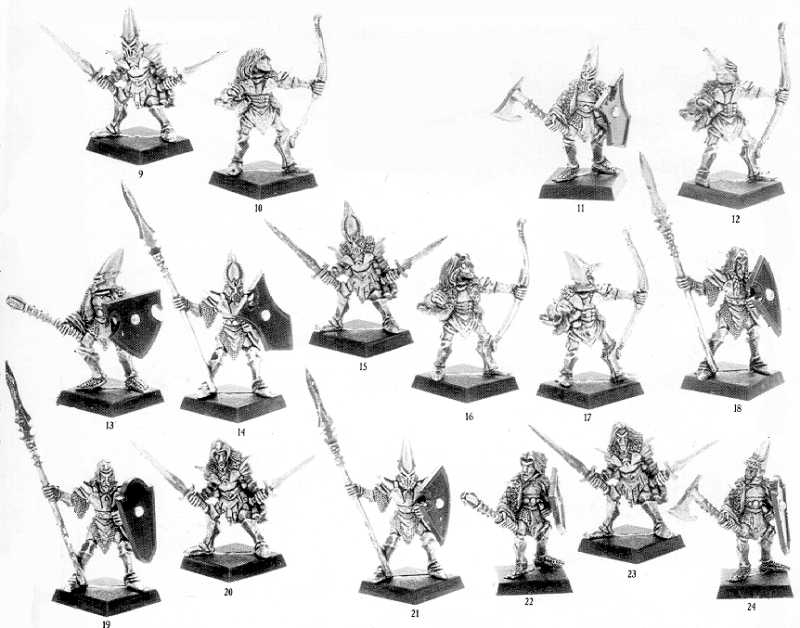
Strange is the name of that ancient race, the Eldur. The tight-lipped followers of the Silent God are said to have coined the word, though its meaning “where a God resides” puzzles savants and sages throughout the Cantons to this day. Perhaps there is truth in the old folk tales of them as pitiless eaters of a long-forgotten deity or perhaps it involves another of that race's arcane cruel jokes.

Hailing from beyond the Veil that hangs between our world and the dark, fell place where life runs on rigid iron rails along great and horrible paths of adventure, the Eldur (often just called the Eld) are said to rule over vast estate piled high with tower-manses, monoliths, slave pens, protein vats and baroque, gargantuan gleaming metal vessel-machines

In this world the few who have witnessed—and survived--their incursions note that their appearance rarely seems by chance they invariably are seen performing strange, determined missions in the furthest corners of the Weird.

What moves their constant machinations inside of machinations little is known, but reports do consistently match up around their physical appearance: pale-whitish skin, long backward sloping skulls, delicate digits; and heights ranging around seven feet. They also favor bright single colors and enameled armor.

The Eld heavily favor long, ultra-slender sabres; short, nastily-barbed stabbing swords; and elaborately-flourished pole arms. Expert craftsmanship gives such weapons +1 to damage. There is a 25% that each group encountered over seven in number, that one of the Eld encountered will carry a piece of eldritch technology such as a Tube of Integument, Mindbox, or Interfogulator (see the upcoming Roustabout's Guide to the Hill Cantons).

All Eld are immune to the effects of sleep, charm, suggestion, and acid-based attacks.


Inspired, in part, by these guys and these and a few others that will remain vaguely mysterious to keep the players guessing. 

Thursday, July 19, 2012

Kezmarok: Questions and Answers

Stealing a page from my blogging friends today I am presenting an open question and answers on Kezmarok, a half-ruined metropolis just south of the Hill Cantons setting proper.  Below are some questions from players on Google Plus (a careful reader will note a certain self-interested cast to them).  Feel free to ask away in comments if you are interested.

The other parts of the series are here, here and here
 Who's who in the Illuminated League and the Banners of the Five?
The Illuminated have several internal factions. The largest are the Realis, a somewhat moderate, fiscally-conservative faction that mostly just wants to downscale the city: raze most of the semi-ruined buildings, wall off the dangerous sectors of the city, downsize the reliance on the mercs of the bonded companies, etc. A number of the Great Hostel owning families and the larger native bazaar merchants support this pole.

The second largest faction of the Illuminated are called the Defeatists by their detractors. They want all of the above and call for a negotiated settlement with the besiegers. They are well backed by Galldred and the some of the foreign merchants plus a few of the local artisan guilds.

Supporting the Banners is roughly half of all native military officers under the Lord-Marshal rank. A small grouping, but with some juice given their strategic position. Their leadership is secretive, but there are some outspoken public leaders like the vainglorious Hulkos the Harried. 

Who is in charge of the city's finances?
It's a complicated procurement/disbursement dance between the Council of Autarchs and the layers of lower bureaucracy. Forms and orders have to be signed and counter-signed for weeks or months. But is known that the Captain-General's Chief Purser can move that expedite or hamper that red-tape process immensely.

Who's in charge of home ownership? As in, where you can live and why and how much you get taxed for it.
About a third of the great abandoned (or semi-inhabited) sections of the city—Kezmarok shrank from its height of 300,000 to its current 40,000—are currently owned by the governing council’s Land Trust. The remaining two-thirds is privately owned by the old impoverished aristocratic families and is essentially in stasis--as is the wont of the private sector across ages when confronted with real, abiding crisis.

Unoccupied buildings (mostly in some state of ruination) can be bought from the trust at full price, but with a (relative) minimum of red-tape and a five-year year rebate on all assessment fees, taxes, and bribes. Currently occupied and maintained buildings are at a premium and you should expect to pay quite a bit more than you would up in the Cantons. 

Squatting is also quite common off the main avenues. The main danger there though comes from the larger squatter bands (who have bribed their way into semi-permanent fiefdoms) and things that go bump in the night. 

Is there an M-U guild?
There is no guild as such and as in the Cantons to the north magic-users are rare and tend to stick to private, unobserved lives. It being a larger, if reduced, city there are at least two known, informal salon-circles (or cabals) of sorcerers, wizards, witches and warlocks. 

An inquiring, discrete soul could put out feelers . One such group tends to congregate around the upper floor of the Finestra hostel, the other Duke Mraz’s Folly.

Do the Turko-Fey have positive relations with any known nation? What would they say about them? What would an average Kezmaroki say about them? What about a soldier? 
The Turko-Fey hail from a pocket plane called on this world “The Summer Country”, a place they share in part with other polities of their race. Even in their home plane are seen as something of a cryptic annoyance.  

In the world of the Hill Cantons they are said to only have passably decent relations with the Scarlet Sultanates of the far South and with the mercenary captains of the Overkingdom. 

To the latter they are considered to be easy if erratic employers. They expect little more than guarding the camps, an annual counter-sally and an occasional abrupt shelling of the outer works of the city. Many returning landsknechts will complain about the strange pay schedule (seemingly random months and years without pay then a generous showering of reddish-gold coins), the cold distant quality of their employers and the dream-like lethargic feeling of the camps. There is a great sense that something is being waited on and that time is a slow, meandering river.  

The average Kezmaroki considers the Turko-Fey to be a cipher, almost like a force of nature. Something unknowable and without much to do about but complain endlessly. The more cocky of soldiers--especially those affiliated with the Banners of the Five--believe that they are a paper tiger.

Who has the best rumors? Who has the most rumors? Who trades information for money, and what are their rates?
Resident foreigners by far and away, native Kezmarokis are almost to a person inward looking with a tendency toward a listless ennui. 

What does the city trade? What's the most unique touristy bullshit thing I could buy for my friends back home? What can't I get anywhere else?
The city has subsided on centuries of essentially trading away its vast, dwindling wealth: tapestries, statues, gold baubles, silks, etc.
The city does produce in gigantic cave-complexes a wide variety of edible fungi. Only two species are exported: one phallic-shaped cap an aphrodisiac, the other a shelf-like mushroom producing a cardamom-like taste. A “floral” bloom of both varieties in a delicate spiral glass vase (another local export) is considered a well-received, if kitschy gift. 

 How are the dead disposed of? How upset would people get if they were eaten, dissected, animated, etc?
There are vast vaults, passages, and catacombs honeycombing the pink-grey granite of the Rock.  There are several entrances to the upper levels where the dead are housed, the most well-known of being through the rear burial complex of the Patriarchate. Most larger temples will have some access and it is known that the fungus beds of the city have side passages into that maze. 

Defiling the dead is considered an abomination in the sight of the Sun Lord. (A quick thrice counter-clockwise swirling of three fingers and a pinky with a flourish.)

What breeds of dog and other domesticates are found in the city?
Dogs are considered unclean and bad luck. 

How good is the library? Am I allowed in? How can I gain access if not?
The Patriarchate and Decade-King’s libraries are among the largest in the world. Access is dependent on the goodwill of those institutions.

How would I be expected to resolve a dispute of property? How about a dispute of honor? An academic dispute?
The most bloody of duels—some of them escalating into small, pitched battles—are to be found in the various ivory towers of the city.  Dueling is common among the gentry.  Preferred weapons are the glaive, bolo and heavy saber. 

All other matters are settled in a ponderous circuit of courts presided by secular magistrates.

What traits and technologies have the Kezmaroki adopted from the Turko-Fey over the years, and vice-versa? 
None on either side other than a shared malaise. 

What are the laws regarding street performance? What about trespassing and window-peeping?
Strangely liberal. Miming however is punishable by impalement.

Wednesday, July 18, 2012

Kezmarok: Factions, Personages, and Local Religions

Being deprived of my weekly game by the craptastic internet connection here at the beach house on the lovely Redneck Riveria (oh first world problems). I have nothing to do but write and design more for the campaign. Here is part three of our Great Tour of Kezmarok. See parts one and two here and here.

Organizations
Political jockeying and philosophizing (abstract theory always trumping praxis in the city) is a full-time spectator sport for the shabby gentility.

The Great Path of Restoration. This league seeks to restore the absolute power of the city’s traditional ruler, The Golden Evexrator. Wracked with internal disagreements over length of the ruler’s term and method of ritual disfigurement for the deposed. Popular with the shabbiest of the impoverished aristocracy.

Illuminated League of the Refoundation. Local citizens who recognize the deep decline of the city and seek to formally divest the city-state of its (long lost) maritime empire. Shockingly the most radical elements in the league seek a settlement with the Turko-Fey sitting outside the gates.  A small minority if well-organized faction.

Wellsprings of the Crowd. An “astroturf” organization funded and maintained by the Council of Autarchs to bolster their political clout.

Banners of the Five. A small militaristic party popular with native junior officers. This dangerous and crazed radical party seeks to break the five-century military deadlock and defeat the besieging host. The name is a reference to five semi-mythical Kezmaroki hero-generals.

Local Religions
Ultra Orthodox Synod of the Sun Lord. Despite its name and hidebound observation of the oldest, strictest and most absurd ritual practices of the Sun Lord’s supernal temple, a reasonably tolerant sect. Shockingly other faiths are allowed to openly practice their religion in non-hidden places of worship. Apostates are however heavily taxed and required to wear indigo wheel badges.

The Minyaan of the Silent God. Not much is known about the tight-lipped, low-key local practioners of this faith. Their prominent hexagonal fane has no windows and only a single, low sunken door as an entrance.

The Grand Church of Latter-Day Hyperborea. Small, mystical order practicing “neo-Hyperborean” religion. Known to annoy locals with their drum circles, toad and elk-head costumes, and dervish-dancing.

Temple of Svatek the Crocodile Godling. This tiny, somewhat sleepy sectlet worships a local demi-god of vigilance. A number of local worshippers were arrested en masse recently after leading an inexplicable riot in which they rushed around beating outlanders from the Hill Cantons with sticks.

Notable Personages of Kezmarok
The Ur-Patriarch, Ummas the Unctuous. Jaded, bored head of the Ultra Orthodox Synod of the Sun Lord.

The Golden Evexrator, Decade-King of all Lands Kezmaroki on the Rock and Beyond. The head of state--at least nominally. Serves for 10 years before being deposed, blinded (humanely as possible) and boxed on the ears.

Vorish Kohniun, Captain-General of the Great Rock. The functional ruler of Kezmarok. Heads the Council of Autarchs, a beancounting and officious ruling council.

Gabrous Swelter, Chief Gaoler, and Torture-Aesthete, of the Pits Below.

Galldred the Scabrous, Merchant Prince of the Trader’s Ward.

(Colorful characters of Kezmarok and Sites of Interest coming next.)